


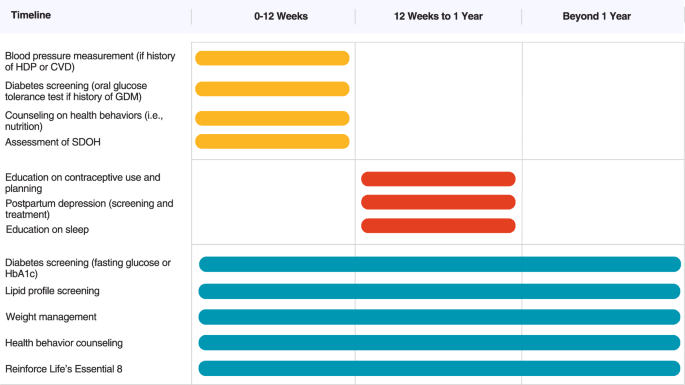
O’Kelly, A. C. et al. Pregnancy and reproductive risk factors for cardiovascular disease in women. Circ. Res. 130, 652–672 (2022).
Google Scholar
Parikh, N. I. et al. Adverse pregnancy outcomes and cardiovascular disease risk: unique opportunities for cardiovascular disease prevention in women: a scientific statement from the American Heart Association. Circulation 143, e902–e916 (2021).
Google Scholar
Wu, P. et al. Preeclampsia and future cardiovascular health: a systematic review and meta-analysis. Circ: Cardiovasc. Qual. Outcomes 10, e003497 (2017).
Google Scholar
Khosla, K. et al. Long-term cardiovascular disease risk in women after hypertensive disorders of pregnancy: recent advances in hypertension. Hypertension 78, 927–935 (2021).
Google Scholar
Garovic, V. D. et al. Hypertension in pregnancy: diagnosis, blood pressure goals, and pharmacotherapy: a scientific statement from the American heart association. Hypertension 79, e21–e41 (2022).
Google Scholar
Lewey, J. et al. Opportunities in the postpartum period to reduce cardiovascular disease risk after adverse pregnancy outcomes: a scientific statement from the American Heart Association. Circulation 149, e330–e346 (2024).
Google Scholar
Countouris, M. et al. Hypertension in pregnancy and postpartum: current standards and opportunities to improve care. Circulation 151, 490–507 (2025).
Google Scholar
Mehta, L. S. et al. Call to action: maternal health and saving mothers: a policy statement from the American Heart Association. Circulation 144, e251–e269 (2021).
Google Scholar
Brown, H. L. et al. Promoting Risk Identification and Reduction of Cardiovascular Disease in Women Through Collaboration With Obstetricians and Gynecologists: A Presidential Advisory From the American Heart Association and the American College of Obstetricians and Gynecologists. Circulation 137, e843–e852 (2018).
Google Scholar
Lumsden, R., Page, C. B., Phelan, M., Wheeler, S. & Pagidipati, N. Longitudinal Management of Cardiovascular Risk Factors Among Postpartum Women. J. Womens Health 33, 853–862 (2024).
Google Scholar
Countouris, M. et al. Feasibility of utilizing telehealth in a multidisciplinary postpartum hypertension clinic. Womens Health Rep. 3, 877–886 (2022).
Mosca, L. et al. Effectiveness-based guidelines for the prevention of cardiovascular disease in women—2011 update: a guideline from the American Heart Association. Circulation 123, 1243–1262 (2011).
Google Scholar
Lloyd-Jones, D. M. et al. Life’s essential 8: updating and enhancing the American Heart Association’s construct of cardiovascular health: a presidential advisory from the American Heart Association. Circulation 146, e18–e43 (2022).
Google Scholar
Chen, H. et al. Life’s Essential 8 and cardiovascular disease in women with a history of adverse pregnancy outcomes. Eur. J. Prev. Cardiol. zwaf021, (2025).
Crear-Perry, J. et al. Social and structural determinants of health inequities in maternal health. J. Womens Health 30, 230–235 (2021).
Google Scholar
Rokicki, S. et al. Home visits and the use of routine and emergency postpartum care among low-income people: a secondary analysis of a randomized clinical trial. JAMA Netw. Open 7, e2451605 (2024).
Google Scholar
Rokicki, S. et al. Impact of nurse home visiting on take-up of social safety net programs in a Medicaid population. Health Aff. Sch. 3, qxaf038 (2025).
Google Scholar
Daubert, M. A. et al. Early postpartum blood pressure screening is associated with increased detection of cardiovascular risk factors in women with hypertensive disorders of pregnancy. Am. Heart J. 273, 130–139 (2024).
Google Scholar
Cusimano, M. C., Pudwell, J., Roddy, M., Cho, C.-K. J. & Smith, G. N. The maternal health clinic: an initiative for cardiovascular risk identification in women with pregnancy-related complications. Am. J. Obstet. Gynecol. 210, 438.e1–438.e9 (2014).
Google Scholar
Janmohamed, R. et al. Cardiovascular risk reduction and weight management at a hospital-based postpartum preeclampsia clinic. J. Obstet. Gynaecol. Can. 37, 330–337 (2015).
Google Scholar
Celi, A. C., Seely, E. W., Wang, P., Thomas, A. M. & Wilkins-Haug, L. E. Caring for women after hypertensive pregnancies and beyond: implementation and integration of a postpartum transition clinic. Matern. Child Health J. 23, 1459–1466 (2019).
Google Scholar
van der Bijl, M. F. et al. FUPEC study, a prospective open-cohort on severe pre-eclampsia and cardiovascular risk factors based in the Netherlands. BMJ Open 14, e093423 (2024).
Google Scholar
Sharma, G. et al. Optimizing psychological health across the perinatal period: an update on maternal cardiovascular health: ascientific statement from the American Heart Association. J. Am. Heart. Assoc. 14, 1–18 (2025).
Google Scholar
Gestational Hypertension and Preeclampsia: ACOG Practice Bulletin, Number 222. Obstet. Gynecol. 135, e237–e260 (2020).
ACOG Committee Opinion No. 736: Optimizing Postpartum Care. Obstet. Gynecol. 131, e140–e150 (2018).
Hauspurg, A. & Jeyabalan, A. Postpartum preeclampsia or eclampsia: defining its place and management among the hypertensive disorders of pregnancy. Am. J. Obstet. Gynecol. 226, S1211–S1221 (2022).
Google Scholar
Kitt, J. et al. Long-term blood pressure control after hypertensive pregnancy following physician-optimized self-management: the POP-HT randomized clinical trial. JAMA 330, 1991–1999 (2023).
Google Scholar
Cairns, A. E. et al. Self-management of postnatal hypertension: the SNAP-HT trial. Hypertension 72, 425–432 (2018).
Google Scholar
Kitt, J. et al. Cardiac remodeling after hypertensive pregnancy following physician-optimized blood pressure self-management: the POP-HT randomized clinical trial imaging substudy. Circulation 149, 529–541 (2024).
Google Scholar
Benschop, L. et al. Blood pressure profile 1 year after severe preeclampsia. Hypertension 71, 491–498 (2018).
Google Scholar
Hirshberg, A., Zhu, Y., Smith-McLallen, A. & Srinivas, S. K. Association of a remote blood pressure monitoring program with postpartum adverse outcomes. Obstet. Gynecol. 141, 1163–1170 (2023).
Google Scholar
Lemon, L. S. et al. Clinical outcomes associated with a remote postpartum hypertension monitoring program. Obstet. Gynecol. 144, 377–385 (2024).
Google Scholar
Whelton, P. K. et al. 2017 ACC/AHA/AAPA/ABC/ACPM/AGS/APhA/ASH/ASPC/NMA/PCNA guideline for the prevention, detection, evaluation, and management of high blood pressure in adults: executive summary: a report of the American College of Cardiology/American Heart Association Task Force on clinical practice guidelines. Hypertension 71, 1269–1324 (2018).
Google Scholar
Williams, B. et al. 2018 ESC/ESH Guidelines for the management of arterial hypertension. Eur. Heart J. 39, 3021–3104 (2018).
Google Scholar
Echouffo Tcheugui, J. B., Guan, J., Fu, L., Retnakaran, R. & Shah, B. R. Association of concomitant gestational hypertensive disorders and gestational diabetes with cardiovascular disease. JAMA Netw. Open 5, e2243618 (2022).
Google Scholar
ElSayed, N. A. et al. 15. Management of diabetes in pregnancy: standards of care in diabetes—2023. Diab. Care 46, S254–S266 (2023).
Google Scholar
Ratner, R. E. An update on the diabetes prevention program. Endocr. Pr. 12, 20–24 (2006).
Google Scholar
Ratner, R. E. et al. Prevention of diabetes in women with a history of gestational diabetes: effects of metformin and lifestyle interventions. J. Clin. Endocrinol. Metab. 93, 4774–4779 (2008).
Google Scholar
Gómez, M. L., Hieronymus, L. B., Ashford, K. B., Barnett, J. M. & Renn, T. A. Linking postpartum and parenting women with a national diabetes prevention program: recruitment efforts, challenges, and recommendations. Diab. Spectr. 31, 324–329 (2018).
Google Scholar
Montes, A. et al. Physiologic and supraphysiologic increases in lipoprotein lipids and apoproteins in late pregnancy and postpartum. Possible markers for the diagnosis of ‘prelipemia’. Arteriosclerosis 4, 407–417 (1984).
Google Scholar
Agarwala, A. et al. Dyslipidemia management in women of reproductive potential: An Expert Clinical Consensus from the National Lipid Association. J. Clin. Lipido. 18, e664–e684 (2024).
Google Scholar
Stuebe, A. M. & Rich-Edwards, J. W. The reset hypothesis: lactation and maternal metabolism. Am. J. Perinatol. 26, 81–88 (2009).
Google Scholar
Grundy, S. M. et al. 2018 AHA/ACC/AACVPR/AAPA/ABC/ACPM/ADA/AGS/APhA/ASPC/NLA/PCNA Guideline on the management of blood cholesterol: a report of the American College of Cardiology/American Heart Association Task Force on clinical practice guidelines. Circulation 139, e1082–e1143 (2019).
Google Scholar
Grant, J. K. et al. Lipid-lowering therapy in women of childbearing age: a review and stepwise clinical approach. Curr. Cardiol. Rep. 24, 1373–1385 (2022).
Google Scholar
Nanna, M. G. et al. Sex differences in the use of statins in community practice: patient and provider assessment of lipid management registry. Circ: Cardiovasc. Qual. Outcomes 12, e005562 (2019).
Google Scholar
Klevmoen, M. et al. Loss of statin treatment years during pregnancy and breastfeeding periods in women with familial hypercholesterolemia. Atherosclerosis 335, 8–15 (2021).
Google Scholar
Makarem, N. et al. Association of a Mediterranean diet pattern with adverse pregnancy outcomes among US women. JAMA Netw. Open 5, e2248165 (2022).
Google Scholar
ACOG Committee Opinion No. 804: Physical Activity and Exercise During Pregnancy and the Postpartum Period: Correction. Obstet. Gynecol. 138, 683–683 (2021).
Tobacco and Nicotine Cessation During Pregnancy: ACOG Committee Opinion, Number 807. Obstet. Gynecol. 135, e221–e229 (2020).
Rich-Edwards, J. W. et al. Randomized trial to reduce cardiovascular risk in women with recent preeclampsia. J. Womens Health 28, 1493–1504 (2019).
Google Scholar
Lewey, J. et al. Effectiveness of a text-based gamification intervention to improve physical activity among postpartum individuals with hypertensive disorders of pregnancy: a randomized clinical trial. JAMA Cardiol. 7, 591–599 (2022).
Google Scholar
Kim, D. S., Eltahir, A. A., Ngo, S. & Rodriguez, F. Bridging the gap: how accounting for social determinants of health can improve digital health equity in cardiovascular medicine. Curr. Atheroscler. Rep. 27, 9 (2024).
Google Scholar
Powell-Wiley, T. M. et al. Role of technology in promoting heart healthy behavior change to increase equity in optimal cardiovascular health: a scientific statement from the American Heart Association. Circulation 151, e972–e985 (2025).
Google Scholar
Kókai, L. L. et al. Needs and preferences of women with prior severe preeclampsia regarding app-based cardiovascular health promotion. BMC Womens Health 22, 427 (2022).
Google Scholar
Ogunwole, S. M., Zera, C. A. & Stanford, F. C. Obesity management in women of reproductive age. JAMA 325, 433–434 (2021).
Google Scholar
Jastreboff, A. M. et al. Tirzepatide once weekly for the treatment of obesity. N. Engl. J. Med. 387, 205–216 (2022).
Google Scholar
Lincoff, A. M. et al. Semaglutide and cardiovascular outcomes in obesity without diabetes. N. Engl. J. Med. 389, 2221–2232 (2023).
Google Scholar
Pi-Sunyer, X. et al. A randomized, controlled trial of 3.0 mg of liraglutide in weight management. N. Engl. J. Med. 373, 11–22 (2015).
Google Scholar
Sharma, G. Treating reproductive-aged women with glucagon-like peptide-1 receptor agonists: what are the clinical considerations?. Circulation 150, 1487–1489 (2024).
Google Scholar
Drummond, R. F., Seif, K. E. & Reece, E. A. Glucagon-like peptide-1 receptor agonist use in pregnancy: a review. Am. J. Obstet. Gynecol. 232, 17–25 (2025).
Google Scholar
Dao, K. et al. Use of GLP1 receptor agonists in early pregnancy and reproductive safety: a multicentre, observational, prospective cohort study based on the databases of six Teratology Information Services. BMJ Open 14, e083550 (2024).
Google Scholar
Cesta, C. E. et al. Safety of GLP-1 receptor agonists and other second-line antidiabetics in early pregnancy. JAMA Intern. Med. 184, 144–152 (2024).
Google Scholar
Imbroane, M. R., LeMoine, F. & Nau, C. T. Preconception glucagon-like peptide-1 receptor agonist use associated with decreased risk of adverse obstetrical outcomes. Am. J. Obstet. Gynecol. S0002937825000419; (2025).
Schwarz, E. B. et al. Duration of lactation and risk factors for maternal cardiovascular disease. Obstet. Gynecol. 113, 974–982 (2009).
Google Scholar
Obstetric Care Consensus No. 8: Interpregnancy Care. Obstet Gynecol 133, e51–e72; (2019).
Lindley, K. J. et al. Contraception and reproductive planning for women with cardiovascular disease: JACC focus seminar 5/5. J. Am. Coll. Cardiol. 77, 1823–1834 (2021).
Google Scholar
Miller, H. E. et al. Addressing postpartum contraception practices utilizing a multidisciplinary Pregnancy Heart Team approach. AJOG Glob. Rep. 2, 100100 (2022).
Google Scholar
Murugappan, G., Alvero, R. J., Lyell, D. J., Khandelwal, A. & Leonard, S. A. Development and validation of a risk prediction index for severe maternal morbidity based on preconception comorbidities among infertile patients. Fertil. Steril. 116, 1372–1380 (2021).
Google Scholar
Leonard, S. A., Kennedy, C. J., Carmichael, S. L., Lyell, D. J. & Main, E. K. An expanded obstetric comorbidity scoring system for predicting severe maternal morbidity. Obstet. Gynecol. 136, 440–449 (2020).
Google Scholar
Powell-Wiley, T. M. et al. Social determinants of cardiovascular disease. Circ. Res. 130, 782–799 (2022).
Google Scholar
Hurwitz, M., Bonomo, J., Spitz, J. & Sharma, G. Intersectionality and social drivers of health in cardiovascular care. Methodist Debakey Cardiovasc. J. 20, 98–110 (2024).
Google Scholar
Keith, M. H. & Martin, M. A. Social determinant pathways to hypertensive disorders of pregnancy among nulliparous U.S. women. Womens Health Issues 34, 36–44 (2024).
Google Scholar
Sharma, G. et al. Social determinants of suboptimal cardiovascular health among pregnant women in the United States. J. Am. Heart Assoc. 11, e022837 (2022).
Google Scholar
Chen, M., Tan, X. & Padman, R. Social determinants of health in electronic health records and their impact on analysis and risk prediction: a systematic review. J. Am. Med. Inf. Assoc. 27, 1764–1773 (2020).
Google Scholar
White-Williams, C. et al. Addressing social determinants of health in the care of patients with heart failure: a scientific statement from the American Heart Association. Circulation 141, e841–e863 (2020).
Google Scholar
Lindley, K. J. et al. Socioeconomic determinants of health and cardiovascular outcomes in women. J. Am. Coll. Cardiol. 78, 1919–1929 (2021).
Google Scholar
Metlock, F. E. et al. Impact of social determinants of health on hypertension outcomes: a systematic review. Hypertension 81, 1675–1700 (2024).
Google Scholar
Churchwell, K. et al. Call to action: structural racism as a fundamental driver of health disparities: a presidential advisory from the American Heart Association. Circulation 142, e454–e468 (2020).
Google Scholar
Caropreso, L., De Azevedo Cardoso, T., Eltayebani, M. & Frey, B. N. Preeclampsia as a risk factor for postpartum depression and psychosis: a systematic review and meta-analysis. Arch. Womens Ment. Health 23, 493–505 (2020).
Google Scholar
Roberts, L., Henry, A., Harvey, S. B., Homer, C. S. E. & Davis, G. K. Depression, anxiety and posttraumatic stress disorder six months following preeclampsia and normotensive pregnancy: a P4 study. BMC Pregnancy Childbirth 22, 108 (2022).
Google Scholar
Screening and Diagnosis of Mental Health Conditions During Pregnancy and Postpartum: ACOG Clinical Practice Guideline No. 4. Obstet. Gynecol. 141, 1232–1261 (2023).
ACOG Committee Opinion No. 757: Screening for Perinatal Depression. Obstet. Gynecol. 132, e208–e212 (2018).
Baattaiah, B. A. et al. The relationship between fatigue, sleep quality, resilience, and the risk of postpartum depression: an emphasis on maternal mental health. BMC Psychol. 11, 10 (2023).
Google Scholar
Lewis, B. A., Gjerdingen, D., Schuver, K., Avery, M. & Marcus, B. H. The effect of sleep pattern changes on postpartum depressive symptoms. BMC Womens Health 18, 12 (2018).
Google Scholar
Smolderen, K. G. et al. The role of the clinical psychologist in the care of adults with cardiovascular disease. JACC Adv. 3, 100910 (2024).
Google Scholar
Sanghavi, M. et al. Telemedicine may increase visit completion rates in postpartum patients with preeclampsia. PLoS One 17, e0275741 (2022).
Google Scholar
Hauspurg, A. et al. A postpartum remote hypertension monitoring protocol implemented at the hospital level. Obstet. Gynecol. 134, 685–691 (2019).
Google Scholar
Ladeiras-Lopes, R. et al. Social media in cardiovascular medicine: a contemporary review. Eur. Heart J. Digit Health 1, 10–19 (2020).
Google Scholar
Cameron, N. A. et al. An enhanced postpartum transition program to primary care. J. Womens Health 33, 1417–1422 (2024).
Google Scholar
link