


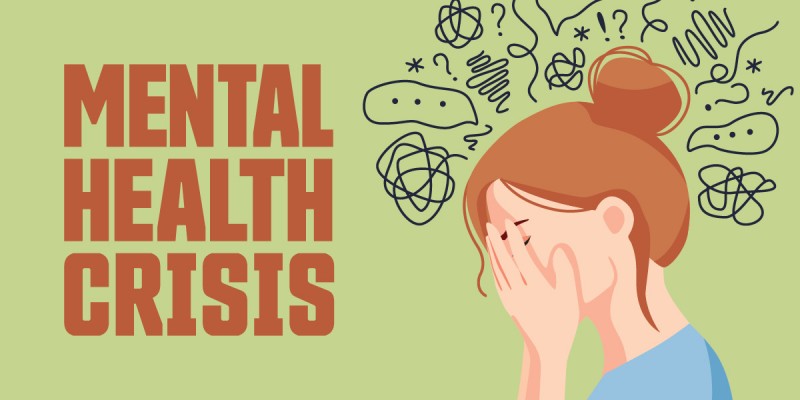
The mental health crisis is one that the numbers can bluntly describe.
According to the National Institute of Mental Health, about one in five adults in the U.S. experiences mental illness. In 2020, there were 21 million people who had a major depressive episode, and 40 million people struggle with anxiety each year. Over 50% of adults cannot receive any treatment, 60% of mental health practitioners cannot take on new patients, and many counties in New York lack sufficient mental health professionals.
Binghamton University’s Decker School of Nursing is working to train the next generation to fill those gaps.
“Binghamton’s program is highly regarded, and it’s at a high level of skill,” says Susan Glodstein, coordinator of the family psychiatric mental health nurse practitioner (FPMHNP) program. “I think what distinguishes this program is that it is so comprehensive. We have an over 90% pass rate on board certification tests, and people seek out our program because of its flexibility. We want our students to be the next leaders, whether they’re educators or clinicians or policymakers.”
In fall 2024, Binghamton transitioned its master’s-level study for nurse practitioners to the Doctor of Nursing Practice (DNP) level, in accordance with recommendations from national nursing organizations. For Glodstein, a board-certified adult psychiatric mental health nurse practitioner, this change made a lot of sense: higher qualifications open the job market for students and create a higher standard of care.
“By offering this program, Decker is educating expert mental health nurse practitioners as advocates of patients’ rights, creating positive changes in a patient’s quality of life,” says Mi Jin Doe ’09, MS ’13, PhD ’20, a FPMHNP and clinical associate professor at Decker. “Now, nurse practitioners can be the leaders of the healthcare practice delivery system, developing policy, advancing healthcare systems and creating interdisciplinary collaboration.”
The FPMHNP program is special for many reasons, including its ability to attract different students. While some follow the direct path from bachelor’s to advanced degrees, others are working professionals who return for additional qualifications. Glodstein believes this change reflects the greater interest and reduced stigma of mental health nationally.
“The average consumer is more aware,” she says. “Traditionally, people were willing to leave it to their doctor. Now, people ask for what they want, and they are partners in their care. Nurse practitioners spend time getting to know our patients, and we have medical backgrounds. We are looking at the whole person, asking them about nutrition and sleep, educating them about alcohol and drugs, and collaborating with their other providers.”
Although the program isn’t online (yet), many classes are delivered digitally in synchronous or asynchronous formats. The program includes lab/simulation experiences, and students must also complete 1,000 clinical hours.
“Decker’s program laid down the foundation for problem-solving, investigating the problem in more depth and considering alternative approaches,” says Jean Van Kingsley, MS ’97, who works for the Greater Binghamton Health Center in the Office of Mental Health and as a FPMHNP for Otsego County, N.Y. “I always say that from Decker, you will have a solid foundation. Some students build a small cabin of knowledge, but others build a mansion.”
The program uses interdisciplinary methods, emphasizes field-based skills and requires scholarly writing. However, students also must maintain high and continuously improving skill sets in the subject itself, such as advanced physiology and pharmacology.
Additionally, focusing on clinical experiences across the life span, from children to geriatric patients, is crucial. This enables graduates to pursue various types of work, including caring for those in rural populations. It also helps prevent service gaps for patients of different ages in areas where practitioners are unavailable.
“Having persistent and thorough clinical experiences in the mental healthcare field can assist students in understanding the whole picture of the system and how to apply the knowledge they learned in the classroom to real patient care,” Doe says.
She adds that Decker strives to provide students with diverse inpatient and outpatient clinical settings, ranging from community centers for adults, children and adolescents to psychiatric emergency room settings.
Still, the challenge remains.
The U.S. Bureau of Labor Statistics forecasts a shortage of 80,000 nurses this year. And even as the workforce is expected to grow by 6% over the next decade, the rising demand for healthcare services and the large number of soon-to-retire professionals are troubling. These trends highlight the urgency for programs like Decker’s to expand their efforts and motivate new cohorts to enter the field.
“A lack of trained professionals is multifactorial,” Van Kingsley says. “The field is also difficult to operate within due to regulations and laws that need review. There are some scope-of-practice barriers for psychiatric nurse practitioners that, once removed, may permit some better flow of care.”
While efforts are underway nationally to break down those barriers, Decker’s faculty works diligently to keep students happy locally while developing the curriculum for the future.
“The framework of nursing education should be more student-oriented,” Doe says. “There is a gap to be filled, and we need to overcome those challenges, but education can create positive changes in the mental health services.”
link
More Stories
Aaron Chan, RN Announces The QD Fund to Support Healthcare Students Advancing Mental Health and Whole-Person Care
Research on college students’ mental health education: the mediating role and the moderating effect of resource allocation
Mental Health Problems Among Medical Students | The psychological anatomy of becoming a doctor